Michael Fenton is a future-focused educator who teaches to interests and abilities, not age group. Across more than three decades he has taught every science and mathematics subject, plus coding and electronics, at secondary and sub-degree level, and has led the design and delivery of NZQA-approved qualifications from Level 3 to Level 7.
A full-spectrum STEM teacher
Few teachers can cover the whole of science and mathematics. Michael is one of a very small number in New Zealand able to teach Biology, Chemistry, Physics, Earth and Space Science, Mathematics and Calculus, alongside coding, robotics and electronics, at both secondary and sub-degree level. With a sustained shortage of qualified and experienced science and mathematics teachers across New Zealand, Australia and the United Kingdom, this breadth lets one person fill several specialist roles that would otherwise require several staff.
Teaching philosophy
The operative framework is low-floor, high-ceiling: entry points open to any learner, with no artificial ceiling on how far the work can go. Authentic tasks, real tools, and genuine questions sit at the centre, with assessment for learning rather than assessment as gatekeeping. Science is treated as something you do, not something you read about. The most fully documented example of this approach in practice is the Nexus Research Group and the learners it produced. Read the Nexus Research Group story. Its practical method is the Build it, Test it, Use it pedagogy.
"Technology should disappear into the learning experience while making thinking visible."
Why "Science is Everywhere" does a disservice to science education
Published commentary . the nature of science
"Science is everywhere" conflates three distinct things: technology, nature, and science itself. Blurring them does not help students become scientists; it helps them stay comfortable bystanders. Better: technology is made, nature is found, and science happens when we wonder why.
Postgraduate (Level 7): Graduate Diploma in Science Teaching and Mathematics Teaching, and Education Leadership, Open Polytechnic of New Zealand.
Degree: Computer science courses, B.App.I.S, Western Institute of Technology at Taranaki.
Diploma: Level 5 Diploma in Information and Computer Technology.
Polytechnic: STEM foundation and bridging courses, Agriculture and Construction.
Green School New Zealand (Year 7 to 13): cross-curricula science and mathematics, an alternative to NCEA.
Secondary (Year 9 to 13): Biology, Chemistry, Physics, Earth and Space Science, Mathematics, Calculus, Electronics, Robotics, Game Design.
Intermediate and Primary (Year 7 to 8): Digital Technology, robotics and game design.
Teaching has been delivered face to face, fully online by distance, and in blended formats. Michael is experienced in Universal Design for Learning, experiential and project-based learning, and mentoring in-service teachers through practice-led action research.
Qualification design and leadership
Michael has led the design, development, and delivery of NZQA-approved qualifications at secondary, vocational, and postgraduate levels. This work spans curriculum architecture, assessment design, moderation framework development, and quality assurance at national scale. He works with ITOs and PTEs to design and write courses and assessments, and to carry out moderation processes that meet external auditing and review requirements.
Tertiary and postgraduate
Level 7 Graduate Diploma in Primary Science Teaching (2011 to 2012), Open Polytechnic of New Zealand. Lead author and designer.
Level 7 Graduate Diploma in Primary Mathematics Teaching (2014 to 2016), Open Polytechnic of New Zealand. Lead author and designer.
Level 5 Diploma in Information and Computer Technology (2005), Western Institute of Technology at Taranaki.
Level 4 New Zealand Certificate in Electrical Trade, General Electrical (2023 to 2025), EarnLearn. Lead designer.
New Zealand Board for Engineering Diplomas Assessment and Moderation Online Training Package (2016).
Secondary
New Zealand Certificate in Study and Employment Pathways (Levels 3 and 4, 2022), co-designed with Dr Christine Fenton for Green School New Zealand. New Zealand's first NZQA-approved alternative to NCEA that also meets University Entrance requirements. Physical Sciences III and Physical Sciences IV.
NCEA Levels 1 to 3 course content and assessment materials in Science, Physics, Calculus, Applied Mathematics, Biology, Chemistry, Games Design, and Robotics and Coding (2006 to 2010).
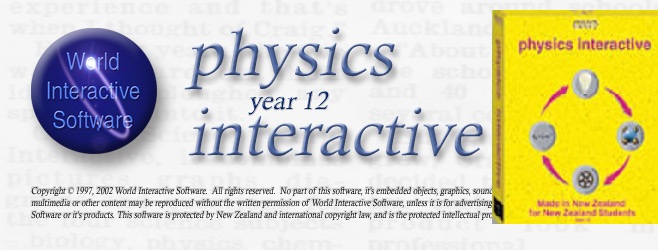
Level 2 NCEA Physics Interactive CD-ROM (2002), World Interactive Software, distributed by Roadshow Entertainment (NZ) Ltd.
"I have been privileged to visit the Open Polytechnic to see their online science and maths teaching courses first hand, and I know how impressive they are. The best thing is that the programme enables teachers to study while working, allowing teachers to put what they learn online into practice almost immediately." - MP Chris Bishop
Instructional design and moderation
Michael is familiar with instructional design models including ADDIE, Bloom, Gagne, and Merrill, and has designed and delivered online courses in both the Moodle and iQualify platforms. He works with stakeholders and subject matter experts across foundation, sub-degree, and degree level programmes, and embeds moderation best practice into course and assessment design. Michael is an expert assessment moderator and also a highly experienced assessment writer for unit standards and skill standards, and has been asked to guide other instructional designers across New Zealand who are writing for the new skill standards.
A briefing note for instructional designers in New Zealand vocational education and training . 2026
A structural-forensic look at the narrative and advocacy for replacing unit standards with skill standards. The briefing traces how outdated narratives and assumptions become embedded in qualifications and assessment, and how to recognise and navigate them. It is the same analytical approach that underlies his Design by Subversion framework. He offers a 3D workflow framework to simplify writing assessments for instructional designers across New Zealand.
Michael also works with generative AI as a creative and technical partner: a way to fill the skill gaps that would otherwise stall a project — the music a non-musician can’t compose, the art they can’t draw, the edge cases they’d never have the patience to test — exactly the gaps where motivation drains away and half-finished work gets abandoned. The aim is not to do the work for the learner but to remove those barriers, so the concept, direction, judgement and iteration stay human while the learner wins back the time and headspace to be curious and create. He teaches the critical side of this too, including ethical use in assessment and the caution that AI assistants can state falsehoods convincingly. For a teacher who has to justify AI use to a sceptical school leader, his game remakes are a concrete example of AI used this way, such as the Transylvania project.
A further reason to keep learners working with real-world observation is that AI models are increasingly trained on a contaminated scientific literature. Richardson and Amaral (2025), in the Proceedings of the National Academy of Sciences, report that fabricated studies from paper mill networks are entering the record faster than legitimate research. A teacher using AI-generated simulation data cannot tell whether the underlying model reflects a real laboratory or a paper mill, whereas a physical sensor reports what actually happened and can still surprise. This makes hands-on measurement not just preferable but, increasingly, epistemically necessary. It also removes the usual defence of simulation: when real instruments were expensive, cost and access were a fair reason to simulate, but when the tools and sensors for first-hand measurement are free or cost only a few dollars, as the free tools and ultra low-cost open-source sensors on this site show, simulation must be justified on other grounds.
Artificial Intelligence in education
Analysis and classroom experience
An evidence-based look at AI in teaching and assessment: the cognitive risks raised by recent research, the warning that AI models trained on a contaminated scientific literature cannot stand in for real measurement, and the opportunity of using AI as a genuine creative and technical partner when the thinking stays with the learner.
A short reflection on using AI in education without either banning it or handing it the work. Building a free browser remake of the 1982 game Aztec as a teaching example, Michael argues that the real gift of an AI partner is not the removal of thinking but the return of time — time a curious human reinvests in more iteration and creativity, while direction, judgement and taste stay human.
A significant part of Michael's career has been spent raising the capability of other educators: mentoring in-service teachers and principals, facilitating professional development, and designing programmes that translate research into classroom practice. As Programme Leader at the Open Polytechnic (2011 to 2018) he led science and mathematics teacher education nationally, and former students have gone on to leadership roles, Fellowships, and a Prime Minister's Science Teacher Prize. Full workshop and professional development detail is on the Workshops, Talks and Science Communication page.
Consultancy and services
Michael is available for course and qualification design, assessment design and moderation, STEM teacher professional development, programme review and quality assurance, and online courseware design, through Focus Consultancy.
Year 12 NCEA Interactive Physics, written by Michael Fenton.
Video showcasing some of Michael's innovative teaching as it impacts on raising the quality of science education across New Zealand.